
The award-winning films starting new conversations about genetic science – by barely mentioning it

An emerging collection of award-winning short films, commissioned by Cambridge researchers, is being released as part of a project to widen conversations about genetic science, particularly among audiences who might otherwise ‘walk away’.
The films have been developed through a project called “Only Human” and focus on people’s experiences and feelings about genetic health. Patients and members of the public speak personally about illness, inheritance, identity and trust. Strikingly, however, genetic science is often absent from the conversation.
That omission is deliberate. The research underpinning Only Human suggests that even the word “genetics” can prompt audiences to switch off from important health information or scare them away. By starting with lived experience rather than science, the team hopes to create space for more meaningful and inclusive public conversations.
Our starting assumption is that people have bigger priorities in life than caring about science.
Only Human – involving a consortium of academics, artists and filmmakers – is one of several initiatives developed through the Kavli Centre for Ethics, Science and the Public at the University of Cambridge’s Faculty of Education.
Although genomic health services are sweeping through the NHS, public engagement with genetics is lagging behind. Government research suggests that a third of people never talk about science with family, friends or colleagues, while 38% consider scientists poor communicators.
The sense of distance is particularly acute among Black and Minoritised communities, who have experienced inequalities and injustice in healthcare. Many are reluctant to contribute to the genetic databases that underpin genomic health research, which means they are underrepresented within them. At worst, disengagement can lead to potentially fatal hereditary conditions going untreated.
The challenge is explicit in the project’s flagship film, It’s Only Human, by filmmaker Jonathan Barnbrook, which features the voices of people from minority ethnic groups who participated in research exploring what they actually hear when scientists talk about genomics. One contributor describes the word “scientist” as “almost like a swear word… for me it doesn’t hold any trust or value.” Another expresses fear and uncertainty: “I thought – it’s a scientist, so what are they going to do? Are they going to do mutations or something?”
Professor Anna Middleton, Director of the Kavli Centre, points out that there is no clear, research-informed approach for building engagement with genomics. Typically, university-based research communication focuses on audiences who are already sufficiently interested in science to attend public lectures and read news articles.
“Our starting assumption with Only Human, based on research from the British Science Association, is that people have bigger priorities in life than caring about science” she said. “They’re the ones we are interested in speaking with. They’re probably about 80% of the population.”
The project aims to start conversations that “meet these audiences where they are” – for example, through film, gaming, or influencer-led engagement on social platforms. Its orbit is deliberately outside of Cambridge and it was co-founded by Vivienne Parry, broadcaster and previous Head of Public Engagement for Genomics England, and Julian Borra, from the creative storytelling agency, Thin Air Factory.
Middleton, as academic lead, has been working with Parry and Borra since 2013 to bring Only Human to life, often against stiff opposition. During that time, the team has developed an Intervention Research Model which also brings in leading creative partners. “People shouldn’t feel frightened by genetic science, they should feel empowered, but we need better ways to welcome them into the conversation,” Middleton said. “The films don’t lead with or explain the benefits of science because we know that doesn’t work for many people. The aim is to spark interest to get the conversation going.”
One insight raised by the Kavli Centre’s research is the importance of listening to and acknowledging people’s doubts and suspicions. Middleton herself, for example, conducted the interview for Fairness and Justice, which was made for Only Human by Ridley Scott Productions and directed by Yasmin Godo.
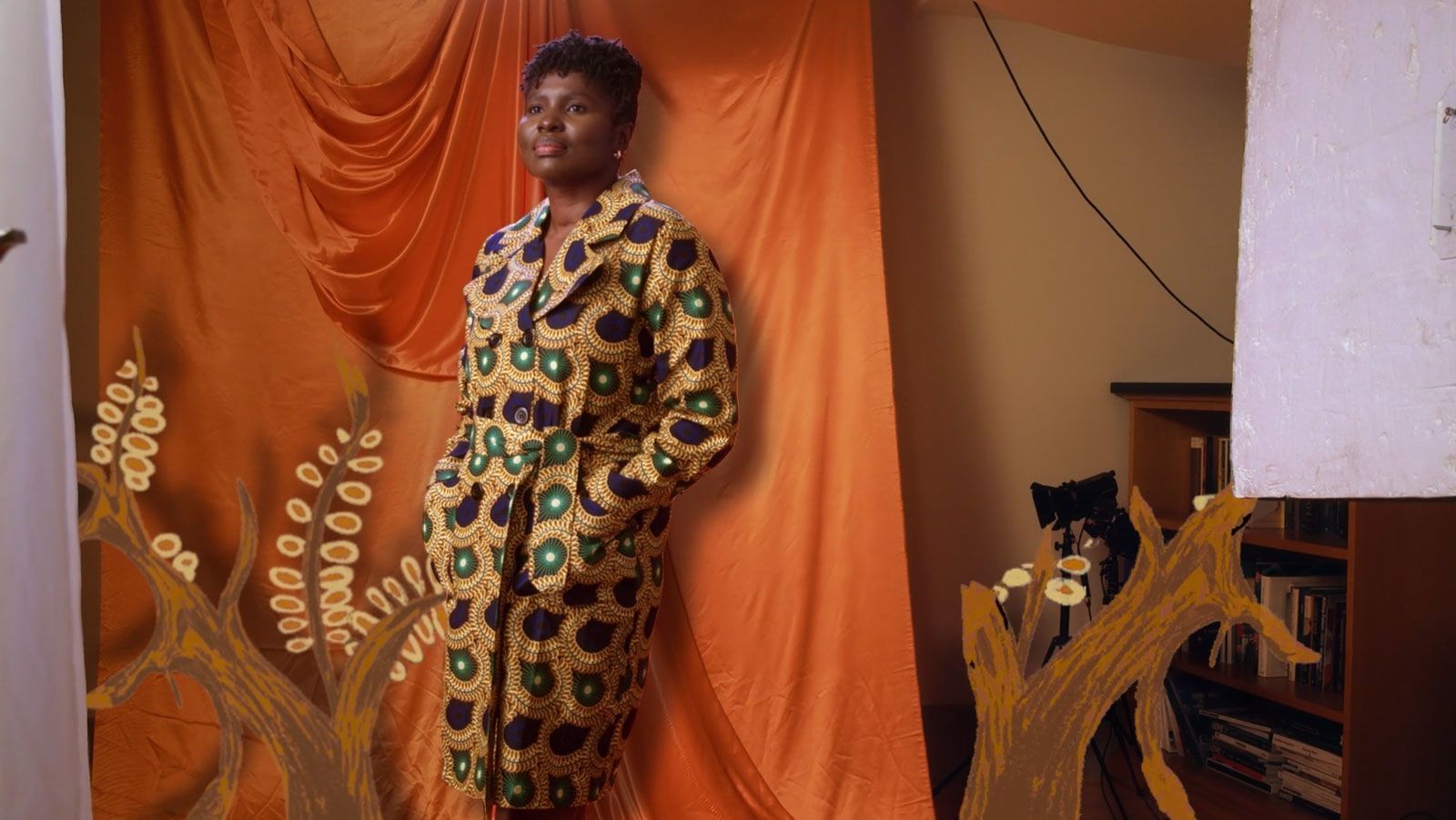
These films tell the story of Brenda Agyeiwaa Poku: a Ghanaian British citizen with Sickle Cell Disease, which affects approximately 17,500 people in the UK, mostly of African and Caribbean descent.
The films explore Brenda’s experience of neglect and racism in seeking treatment for her condition in the UK: one which, as Kavli Centre doctoral researcher, Lydia Okoibhole, has shown, is far from isolated.
Fairness and Justice becomes a call for scientists to listen more closely to patients, rather than just preaching about the benefits of their work.
“It still feels like I’m a lab rat,” Brenda says. “…I go to conferences and hear scientists presenting different genetic therapies and treatments and prospects. You wonder, do they hear and see the people behind it?”
Another film, Liming with Gran, was created as part of an initiative to reach Black communities in London through the Caribbean tradition of “liming” – relaxed conversation over games and food. In the film, Jean, an 84-year-old woman who came to the UK from Jamaica in 1960, chats with her grandson, Tré, while playing with a specially-designed set of dominoes (made for the Only Human project) which feature conversational prompts that can be used to start conversations about genetics through the lens of health and wellbeing in the family.
Public relations consultancy Ketchum distributed domino sets through community spaces like barbers’ shops, cafes and churches, and screened the film in local cinemas. Its evaluation suggested that 84% of audiences the project engaged said they were more likely to talk about health issues.
Liming with Gran has received multiple international awards for its approach to engagement, including a Silver Award in “Creative Use of Media” at the Clios; the advertising and marketing awards that recognise excellence in innovation and design. Fairness and Justice has meanwhile won multiple film festival awards and has also been widely screened, including with the Sickle Cell Disease society during Black History Month.
We really want to understand what gets people turning towards science.
Middleton describes each film, game or artwork produced through Only Human as a potential “hello” – a starting point that might allow genetic science to be introduced gently into conversation, when people feel ready to engage on their terms.
The project has been a long time in the making, primarily because its evidence-based approach requires each stage to be evaluated and validated through qualitative and quantitative measurement.
The next stage will involve structured research inquiry into whether its potential is being realised. “Some of these films have a ‘wow’ factor but does that change how people engage over time?” Middleton said. “We really want to understand what gets people turning towards science. Everybody should have the right to be part of the conversation about genetics and to make choices that are right for them.”
Further information: https://onlyhuman.world/films/
Awards for Fairness and Justice
Winner, Best Science Documentary: Toronto/Los Angeles Documentary Feature and Short Film Festival, 2025.
Winner, Best Scientific Film: Remember the Future World Film Festival.
Winner, Best Short Documentary: SoCal Film Awards 2025.
Selected for screening: Courage Film Festival, Berlin, 2025.
Awards for Liming with Gran
Silver Award for Creative Use of Media at the Clios 2025.
5 awards at the EMEA Purpose Awards, 2025.
5 awards at the Drum Marketing Awards.
4 awards at the Saniss Global Health Awards.
Best healthcare campaign of the year, PR Week Global Awards
Image in this story: Still from Health and Connection to Genetics: one of three short films about the experiences of Brenda Agyeiwaa Poku (pictured) created for the Only Human project by Ridley Scott Productions.